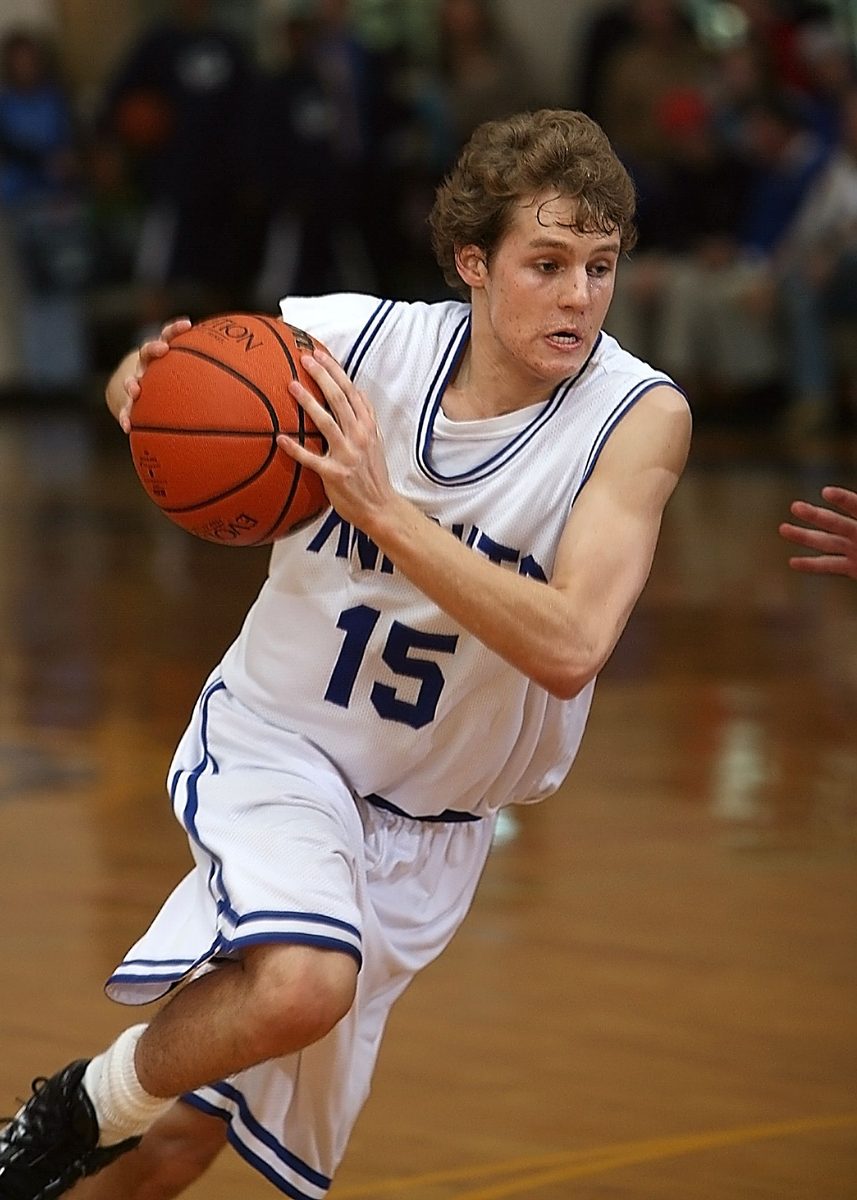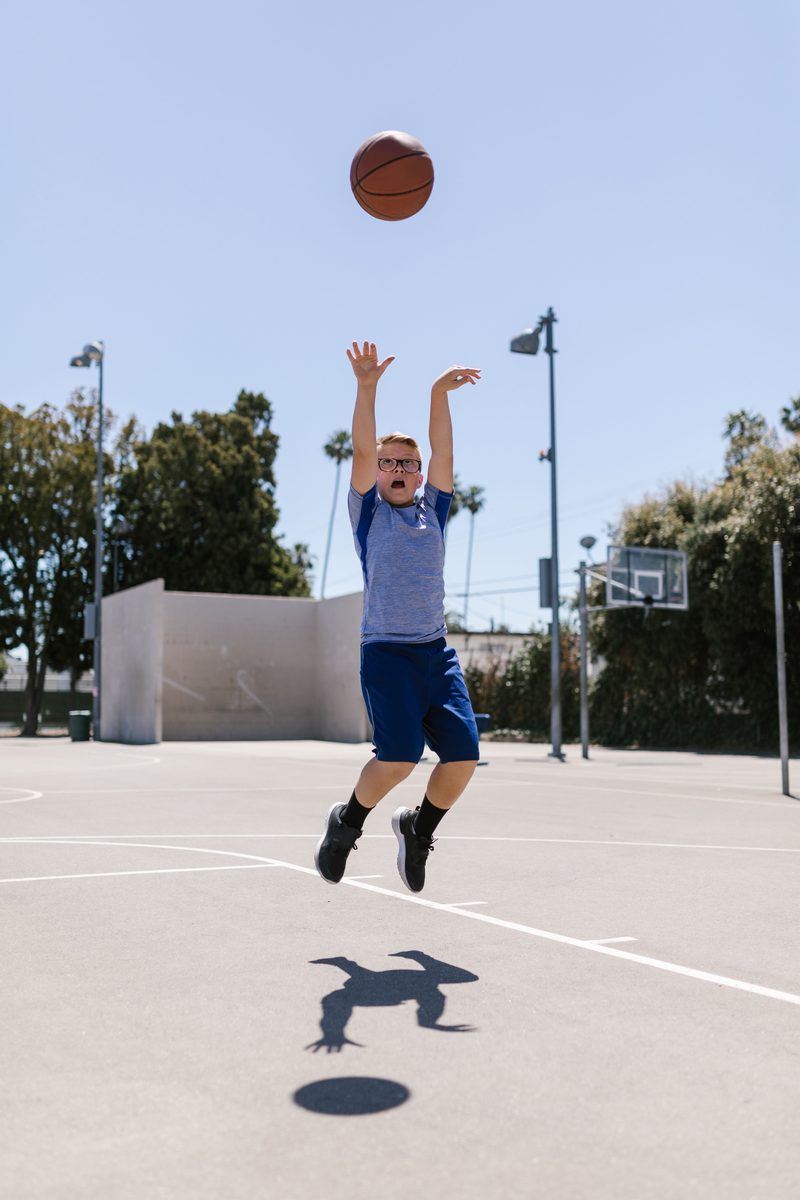
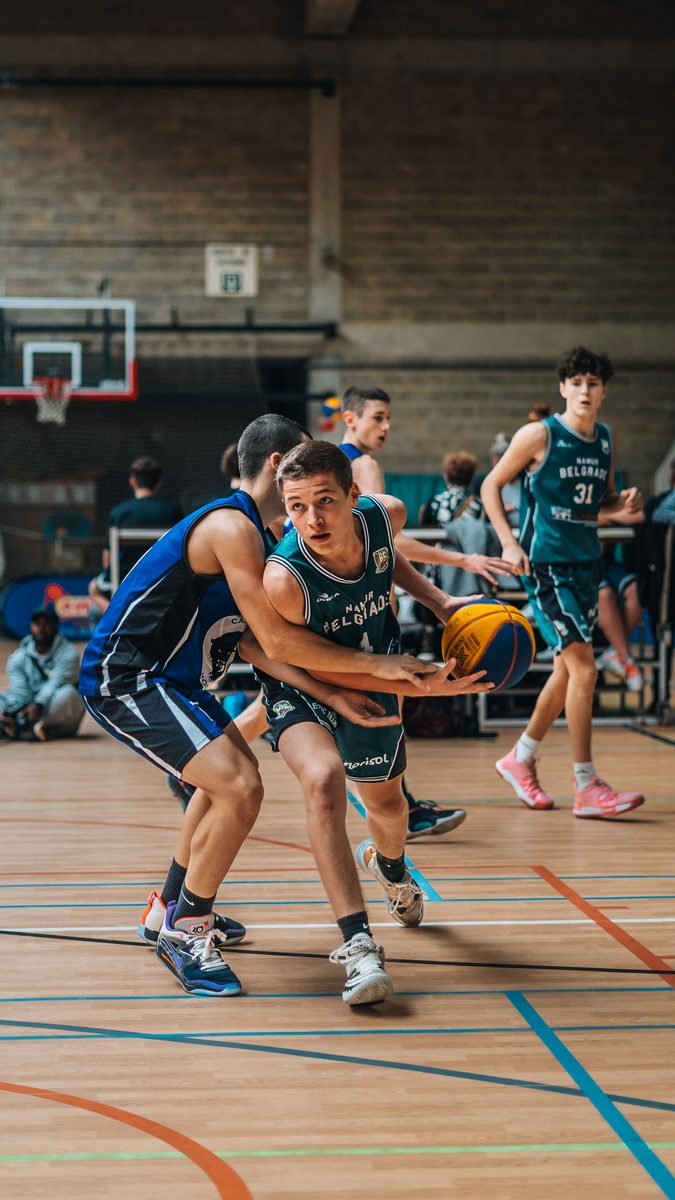
Handles are not built in games. They are built in driveways, garages, and gym corners — in short daily sessions a young player can actually stick to. Fifteen minutes a day beats two hours once a week, every time. This is the exact ball-handling workout Coach Elliott gives Craft Masters Training players in New Rochelle: no cones required, no partner needed, just a ball and a small patch of floor.
The Rules Before You Start
- Eyes up. Every drill is done looking at a target — a spot on the wall, the rim, a tree. Handles you can only use while staring at the ball are not handles.
- Low stance. Hips down, chest up, like you are about to guard somebody. Tired legs are part of the workout.
- Mistakes are the workout. If you never lose the ball, the drill is too easy. Push the speed until it breaks, then rebuild. That edge is where improvement lives.
- Both hands, always. Every drill below gets equal weak-hand reps. Defenders force you to your weak side on purpose — be ready.
Minutes 0-5: Stationary Series
Thirty seconds each, no breaks. Pound the ball hard — game dribbles are loud.
- Pound dribbles — right hand, then left. Waist height, hard as you can control.
- Low dribbles — below the knee, fingertips, both hands.
- Crossovers — low and tight, below the knees (the footwork is in our crossover guide).
- Front V-dribbles — push the ball side to side in front, one hand at a time.
- Side V-dribbles — ball beside your hip, front to back.
- Through the legs — stationary, alternating, then continuous same-leg.
- Behind the back — wrap it around, keep your stance still.
- Figure 8s — low dribbles around both legs, then reverse direction.
- Spider drill — front, side, other side, behind: around the body in rhythm.
- Freestyle — mix everything for the last 30 seconds.
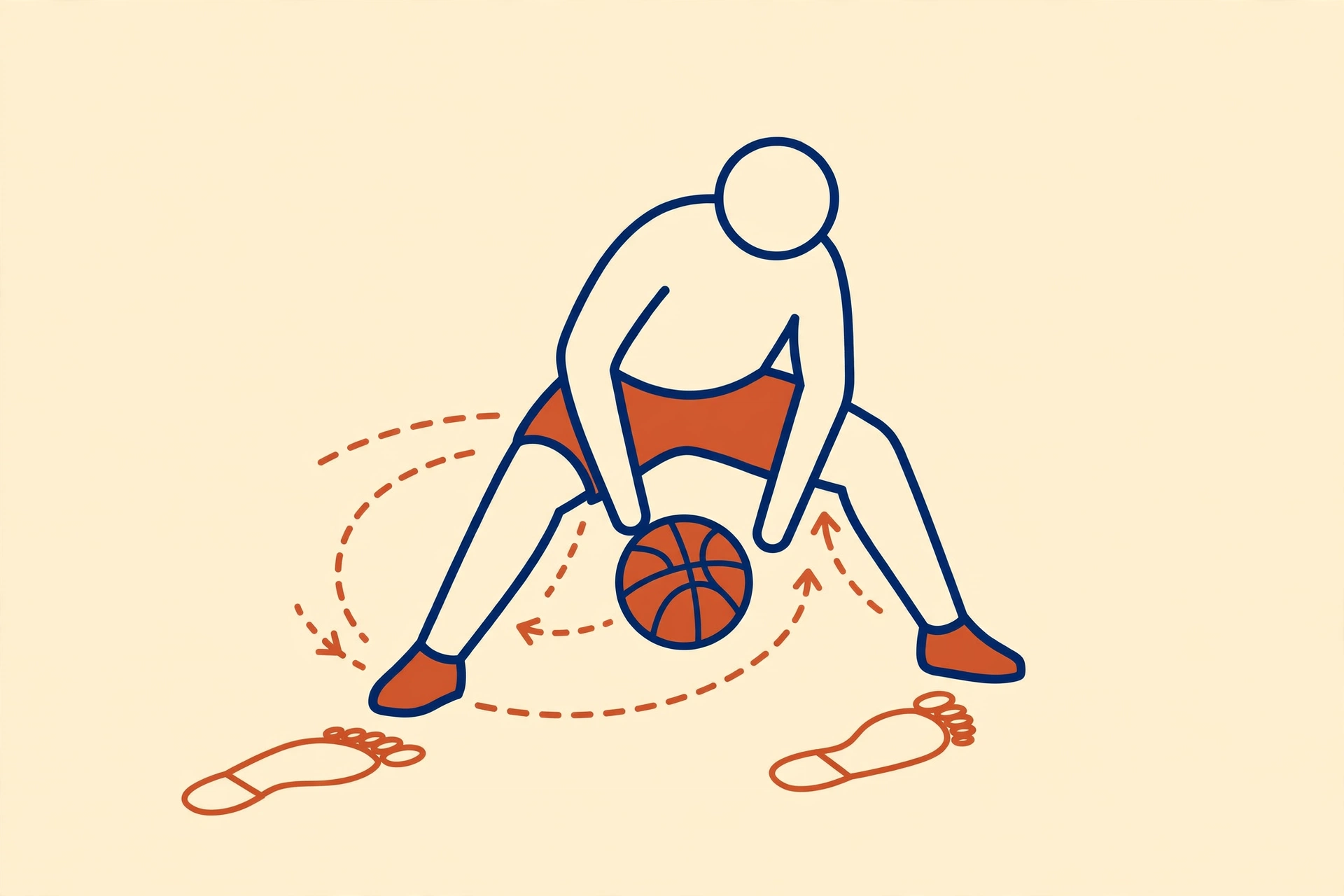
How the Between-the-Legs Actually Works
The through-the-legs reps above only pay off with real mechanics. Start lower than feels natural — feet wider than your shoulders, hips dropped, chest and eyes up; if your knees are straight, the move is already broken. For a right-to-left rep: step forward with your right leg as the ball is dribbled in your right hand, and as that foot plants, push the ball down and through the gap under your right thigh, front to back, low and quick. Your left hand receives it behind your left leg while your left foot steps out wide into a fresh low stance. Ball and feet move as one motion — the step is the fake that sells the drive, and the ball slipping under your leg stays protected from the defender the whole way. And the rule we never bend: every between-the-legs rep ends with an attack step out of it. It is a direction change at speed, not a dance at the top of the key.
Minutes 5-10: Two-Ball Series
Two balls expose a weak hand instantly — there is nowhere to hide. Thirty seconds each:
- Together pounds — both balls at the same time, same height.
- Alternating pounds — one up while the other is down, like pistons.
- Two-ball low dribbles — control and fingertip strength.
- Two-ball crossovers — cross both at once, then alternate the cross.
- One high, one low — coordination chaos, in the best way.
No second ball? A tennis ball in the weak hand while you dribble the basketball works the same magic.
Minutes 10-15: On the Move
Now the handles have to travel. Use a driveway, hallway, or the length of a court:
- Full-court crossovers — a crossover every two dribbles, down and back, both directions.
- Retreat and go — two dribbles forward, two backward (protect the ball), explode forward. Teaches you to handle pressure.
- Hesitation dribbles — dribble, freeze for a half-second standing tall, then burst. The hesi sets up everything.
- Combo moves — cross → between the legs → behind the back, continuous, down and back.
- Finish strong — last minute: every trip down ends with a layup, floater, or pull-up at game speed.
How to Make It a Habit
Attach the workout to something that already happens daily — before school, right after homework, while dinner cooks. Track it on a calendar and do not break the chain; at Craft Masters we call this the improvement loop: set the target, do the reps, check the result, adjust. Within three weeks of daily work, players feel the ball become quieter in their hands — fewer looks down, fewer turnovers, more confidence attacking. That is not talent. That is Tuesday.
Take It to the Next Level
Daily solo work builds the handle; coached sessions turn it into a weapon — reading defenders, picking the right move, and using your handles under pressure at game speed. That is what we do at Craft Masters Training in New Rochelle, NY. Book a session or check the rates, and bring your 15-minute streak with you.