Twenty years ago, the step-back jumper was a playground move. Today it is the signature shot of the modern game — the move guards use to create a clean look against any defender, at any level. It is also one of the most mis-taught moves in youth basketball: kids fade sideways, shoot off balance, and wonder why it never goes in. Here is the step-back done right.
What Makes the Step-Back Work
The step-back is a separation move. Your defender is guarding your drive; the step-back punishes them for it by snapping you backward into open space while their momentum carries them forward. The magic is not the step — it is selling the drive first. No drive threat, no separation. The defender has to believe you are going to the rim.
The Two Footwork Options
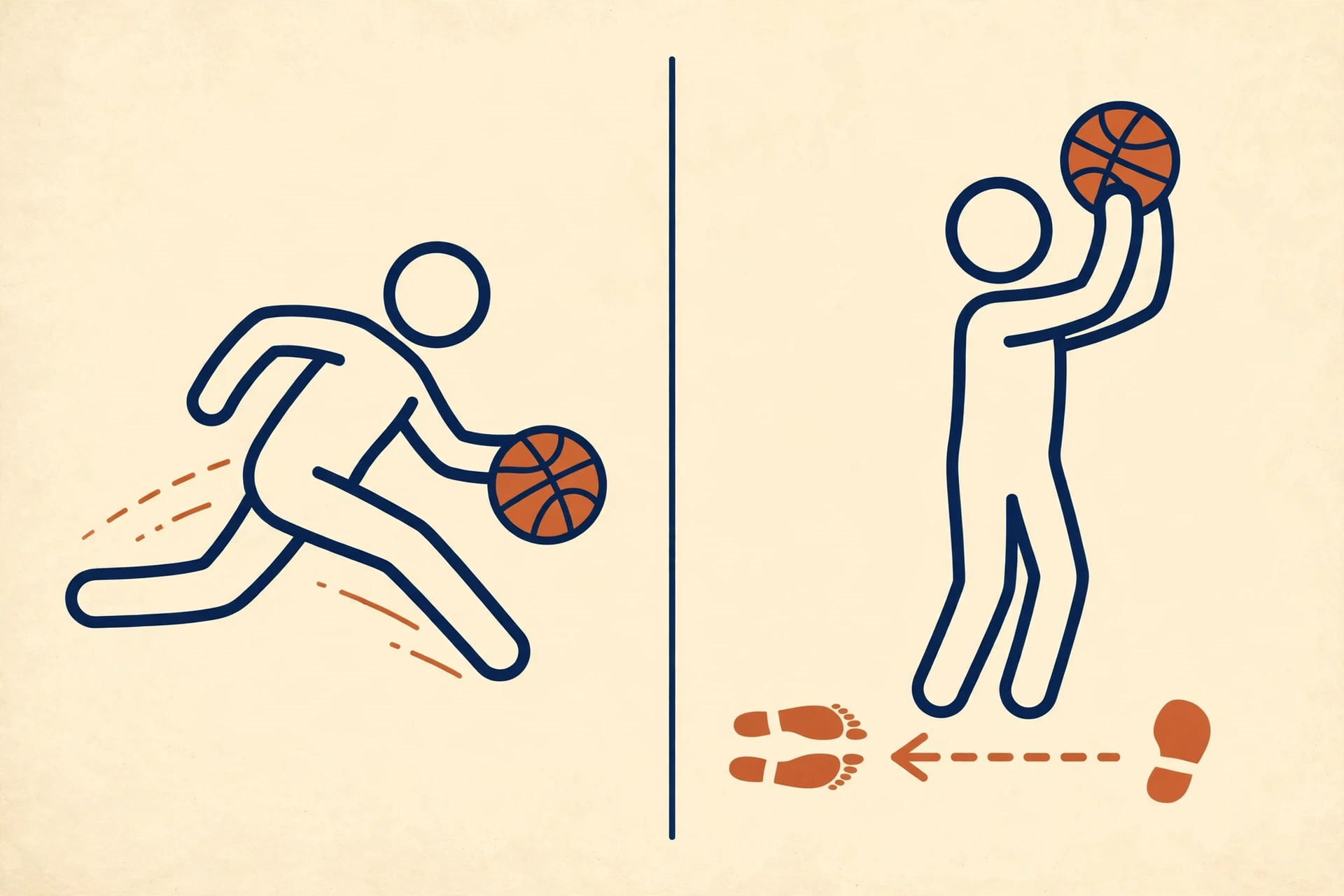
The 1-2 Step-Back (best for young players)
- Dribble hard toward the defender — a real drive step, shoulder low.
- Plant your inside foot and push off it backward, landing on your outside foot first, then the inside foot: a quick "one-two" into your shooting base.
- Rise straight up and shoot your normal jumper. Your feet should land roughly where your shooting stance always starts.
The Hop Step-Back
- Same drive sell, same push-off.
- Land on both feet at the same time in your shooting base — a small hop backward.
- Shoot immediately. The hop is faster but demands more leg strength and balance, so we introduce it after the 1-2 is solid.
Balance Is Everything
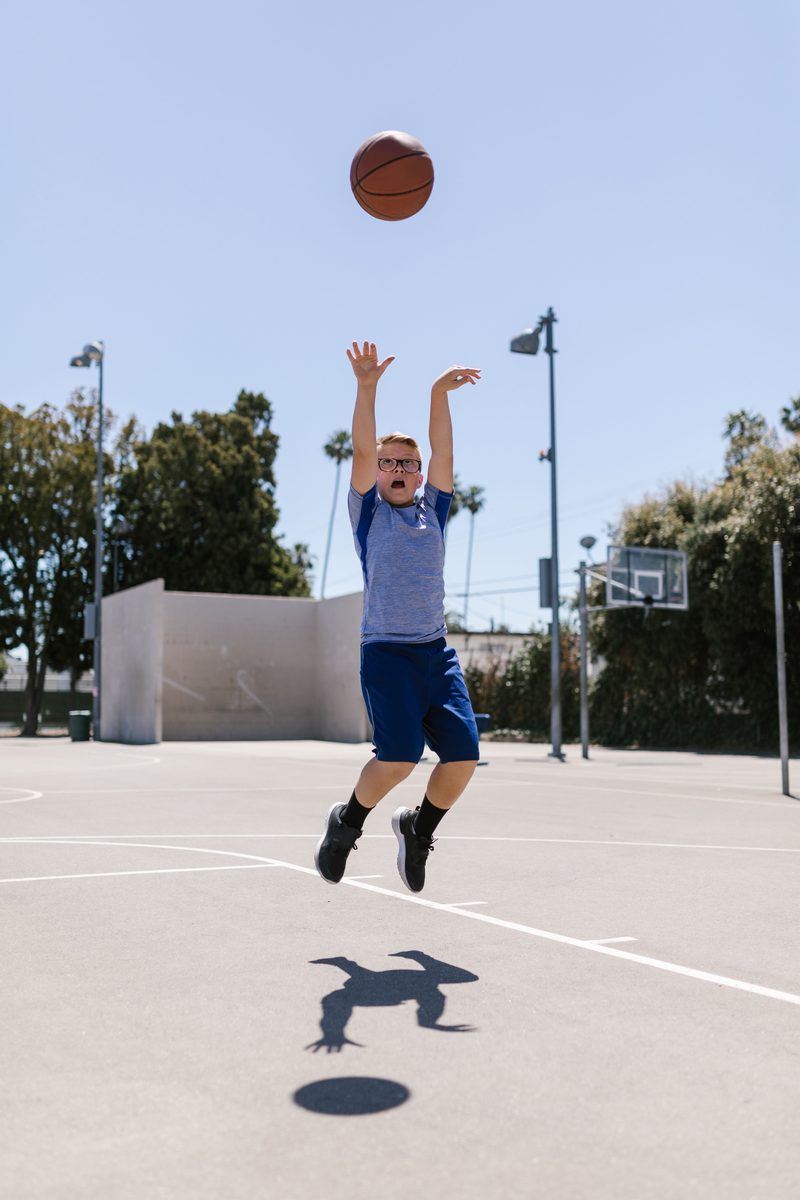
Watch young players miss step-backs and you will see the same picture: shoulders leaning back, legs split wide, ball pushed instead of shot. The step-back should end in the exact same balanced shooting stance as a catch-and-shoot. Three checkpoints we use in Craft Masters sessions:
- Feet under hips — not staggered, not wide.
- Chest up, hips down — sit into the landing like a chair, then rise.
- Land where you can hold it — if you cannot freeze your landing for two seconds, you were off balance.
Read Your Miss Like Kobe
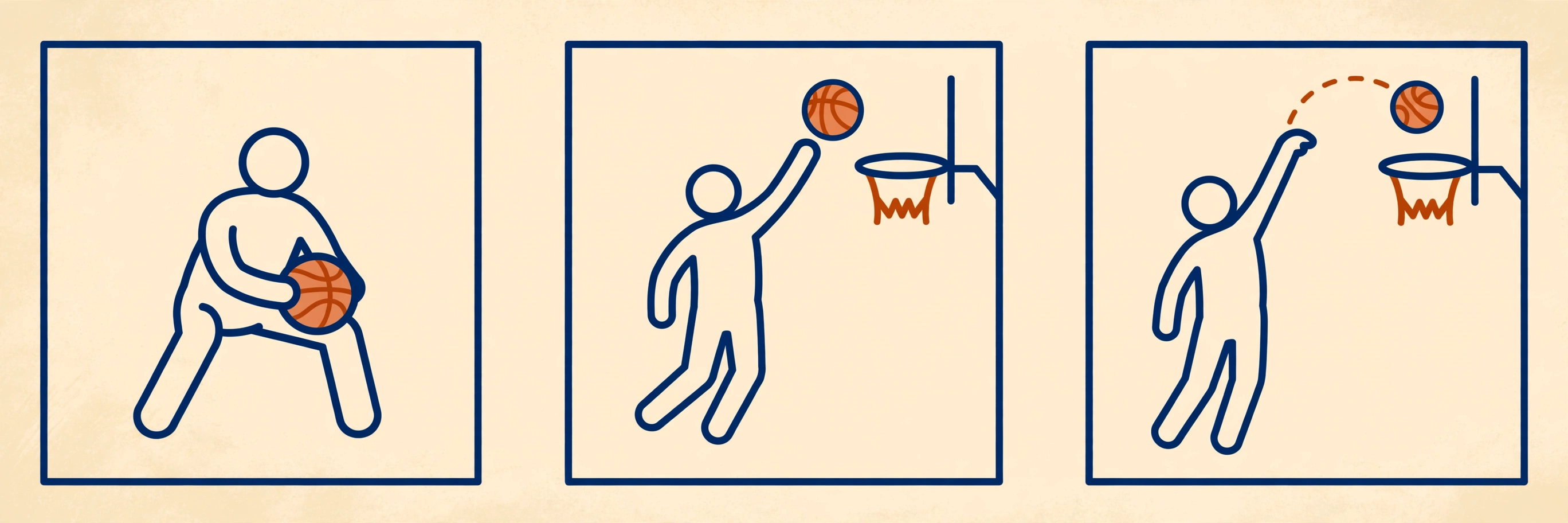
Shoot the same shot every time and a miss becomes information instead of a mystery — this was Kobe Bryant's great shooting habit, and it applies to the step-back exactly as it does to any jumper:
- Short? Your legs did not load. Check the dip — ball and knees dip together, small and quick, and the power comes from the legs.
- Long? Too much arm, not enough arc. Let the legs drive and the wrist finish.
- Left or right? Your base was turned, or your guide hand pushed. The guide hand sits on the side of the ball and comes off clean — the shot leaves off the index and middle fingers only.
And hold the follow-through until the ball reaches the rim, elbow above the eyebrow. If you cannot name why you missed, your form is not repeatable yet — that is what the drills below are for.
Is the Step-Back a Travel? The Harden Rule
Every young player has heard it from a playground critic: "That step-back is a travel." James Harden built a Hall of Fame career on the move — and referees at the highest level call it legal, because of one concept every player should understand: the gather step.
Here is the rule, the modern way (the NBA and FIBA both play under it). When you dribble and then pick the ball up, the moment of the pickup is called the gather. If a foot is already on the floor or in motion as you gather, that step counts as step zero — it is part of ending your dribble, not one of your two steps. After the gather, you get two full steps.
Now watch Harden's step-back with that lens: he gathers the ball while his drive foot is coming down (step zero), then takes his two steps — backward — into his shooting stance, and shoots. Two steps after the gather, taken backward instead of forward. Legal. What would be a travel: gathering with both feet already set and then stepping (no step zero available), shuffling the landing feet after the step-back, or hopping and landing again. Direction does not matter to the rulebook — forward, sideways, or backward, it is two steps after the gather.
Why does this matter for a youth player? Because footwork practiced legally at full speed reads as "smooth" to referees, while sloppy gathers get whistled. In training we teach players to gather on the move — pick the ball up as the step lands, never after both feet are planted — so the step-back, the Euro step, and every finish in this blog stay on the right side of the whistle.
The honest warning for school and youth ball. The gather step is the NBA and FIBA rule. Most American school basketball plays under stricter high school rules with no official step zero — the foot on the floor when you gather becomes your pivot foot, and a two-step Harden-style step-back can get whistled whether it was clean or not. So at Craft Masters we teach the version no referee can take away: one hard dribble at the defender, gather, one step back, shoot. Learn the pro version to understand the game; use the one-step version to survive your own.
When the Step-Back Is the Right Shot
- Your defender is pressing up and backpedaling — their momentum does the work.
- The clock or the play demands a shot you create, not one the defense gives.
- As a counter: when defenders start sitting on your crossover and drive, the step-back keeps them honest.
- It is the wrong shot when a teammate is open, when you are fading early in the clock with no drive sell, or when you have a clear lane. A step-back is a tool, not a habit.
Drills to Build Your Step-Back
1. Form Step-Backs (no defender)
From the elbow: dribble in place, drive step, 1-2 step-back, shoot. 25 makes, tracking your landing balance every rep.
2. Cone Separation
Attack a cone at game speed, step back behind an imaginary line, shoot. The cone forces a real drive sell — jogging through this drill teaches nothing.
3. Step-Back Series
Five spots around the arc, 5 shots each: drive middle step-back, drive baseline step-back. Chart your makes — at Craft Masters we believe in tracking progress, because what gets measured gets better.
The Step-Back in the Modern Game
The step-back three has reshaped basketball — it is a centerpiece of the new-age trends every young player needs to understand. But pros built it on thousands of balanced reps, not on imitation. Learn the footwork, earn the balance, and the step-back becomes a real weapon. Want it coached properly? Train with Coach Elliott in New Rochelle and build your shot the right way.